

Is your engine temperature spiking at red lights but dropping as soon as you hit the highway? Your radiator fan is the prime suspect—but a fan that won't spin isn't always a broken fan. Before you start the diagnosis, look for these common signs of a failing cooling fan:
- Rising Temperature at Low Speeds: The needle climbs toward the red zone when stopped or in heavy traffic.
- No Cooling from the A/C: The air conditioning feels warm because the fan isn't pulling air through the condenser.
- Strange Noises: You hear a grinding or screeching sound from the front of the car.
- Unusual Vibrations: You feel a shimmy through the steering wheel when the fan attempts to engage.
Follow this 6-step diagnostic guide to confirm if you truly need a new Radiator Fan Assembly or just a simple electrical fix.
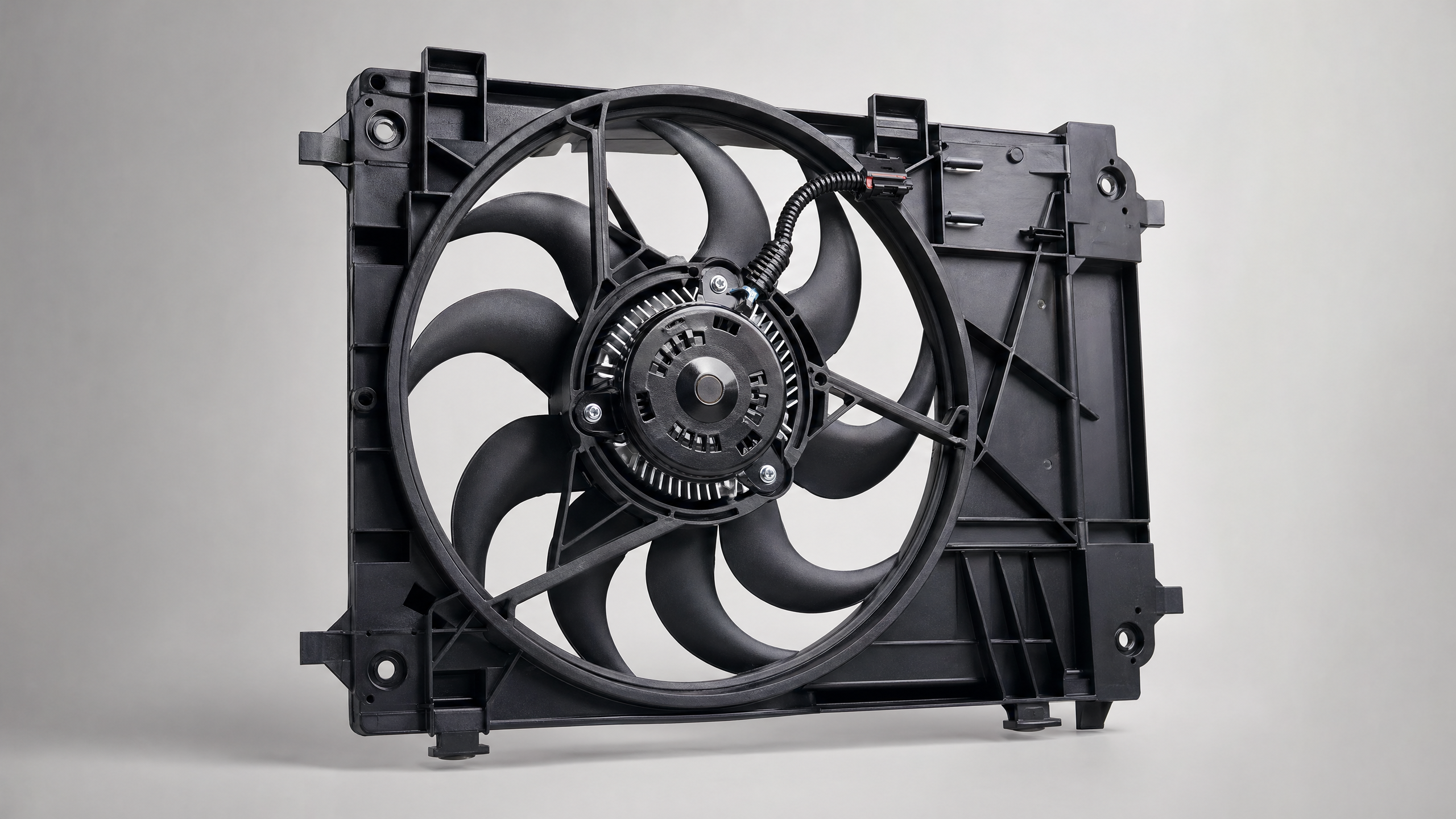
Step 0: The Quick Check (Can I Fix It?)
- DIY Friendly: If the fan is a bolt-on unit accessible from the engine bay—standard for many trucks like a 2014 Ford F-150—this is a straightforward swap.
- Pro Alert: If the fan requires removing structural braces or involves heavily melted high-voltage wiring, consider a professional shop.
Step 1: The A/C Shortcut (Rule Out the Computer)
This is the most critical step to isolate the "Command" from the "Action".
- The Test: Start the engine and turn the Air Conditioning to MAX.
- Decoding the Results:
- Result A (Fan Spins Up): Your fan motor is HEALTHY. The problem is likely the Coolant Temperature Sensor or the Thermostat failing to tell the fan when the engine is hot. Do NOT replace the fan.
- Result B (Fan Stays Dead): The fan is either broken OR it's not getting power. Check the Fan Fuse and Relay in the fuse box before buying a new unit.
Step 2: Read the DTC Codes (Listen to the ECU)
Scan for codes even if the Check Engine light isn't on, as some systems (like those in a 2012 Honda Civic) may store "pending" codes:
- P0480/P0481: Direct evidence of a fan control circuit failure.
- P0117/P0118: Evidence that the engine doesn't know its own temperature.
- If the "brain" is blind, it won't trigger a perfectly good fan.
Step 3: Listen and Feel for Mechanical Failure
- Hear: A grinding or screeching sound when the fan struggles to turn indicates failing internal bearings.
- Feel: Excessive vibration through the steering wheel when the fan kicks in means a blade is chipped or the motor shaft is bent.
Step 4: The Physical Proof (The Smoking Gun)
Don't order a new part until you see these "Point-of-Failure" marks:
- The "Finger-Spin" Test: With the engine OFF, flick the fan blades. If they feel stiff, crunchy, or won't move, the motor is seized and requires replacement.
- The "Burn" Mark: Inspect the electrical connector. On high-power cars like a Dodge Challenger, the pins often melt or turn black. If the plug is melted, you need a new fan and a connector pigtail.
Step 5: Matching the Right Part for Your Vehicle
| Diagnostic Finding | Recommended SKU | Essential "Add-Ons" |
|---|---|---|
| Seized Motor / Broken Blades | Radiator Fan Assembly | New Fan Relay |
| Melted Connector Pins | Fan Assembly | Electrical Pigtail Repair |
| A/C Test Failed / Fuse OK | Radiator Fan Assembly | Dielectric Grease |
Summary
By upgrading from "symptom-swapping" to root-cause diagnosis, you ensure that you buy the exact part required for your specific Year, Make, and Model (YMM). This systematic approach reduces invalid DIY attempts and keeps your engine running at the perfect temperature.